In this article, an anonymous contributor who completed a Master’s degree at Leiden University shares their experience of working in the Netherlands after graduation. Their story explores career setbacks, unexpected opportunities and Dutch work culture, offering practical insights for international students in the Netherlands.
How did I end up here?
My road to finding a job in the Netherlands was certainly not straightforward or predictable. I didn’t come here with a clear idea about my future dream job – I didn’t even know where I’d end up geographically.
Since starting my degree in 2017, my study programme gave me the chance to live in Moscow and Prague. After my Bachelor’s, I returned to my home city, Warsaw, where I initially thought I might settle down – I wasn’t necessarily set on working in the Netherlands after graduation. However, as I started looking for opportunities internationally again, a job offer in Amsterdam convinced me to give it another try. Happy out of my mind, I gave up on my ambition to continue my education.
Setbacks and unexpected opportunities
Things took an unexpected turn when, shortly after arriving back in the Netherlands, my job placement was suddenly cancelled. I left my Warsaw life behind and had no plan B. It was a terrible time, but after many tears and failed expectations, the support of my old friends here convinced me to stay.
I found jobs in a restaurant and a retail shop. At first, I thought: “This is not the job I wanted after graduation!” What felt like a downgrade eventually helped me finance my Master’s at Leiden University, and just like that, I was an international student in the Netherlands again.
During my studies, connections from Prague helped me maintain a part-time job with a Czech company working on EU R&D projects. One focused on quantum technologies. The topic sounded really abstract, but I found it interesting. Little did I know it would become an everyday theme of my life.
One skipped lecture
When I learned that the project’s annual meeting was taking place at TNO in The Hague, just around the corner from my campus, I decided to show up. All I had to do was skip one lecture.
I found the meeting extremely exciting. I could finally meet my remote colleagues, see their enthusiasm and the results of my work. I started asking around: was there room for non-technical people in this field?
Instead of competing for jobs related to my degree, I focused on quantum technologies. I already knew the people, understood the ecosystem and, most importantly, enjoyed the topic. I felt like I’d found my niche. A connection from that meeting eventually helped me apply for a position at TNO. What still feels a little surreal to me is that I got it!
Working in the Netherlands after graduation: What I learned
I’ve now celebrated two years at TNO’s Quantum Technologies department. The communication style in the Dutch working environment is pretty much as direct as I expected it to be. It took me some getting used to, but it definitely makes work easier, leaving less room for misunderstandings. My colleagues are supportive, professional and incredibly smart, so I’m grateful to have them as role models. Still, when I find myself in the lab discussing physics-heavy projects, I sometimes laugh: what the heck am I doing here?
My tips? Don’t plan too much ahead. Put yourself out there, meet people, attend events and ask questions, even outside your field. When applying for a job, think about whether it makes you even a little bit excited. It took me time to accept that I wasn’t interested in what I was “supposed” to be interested in according to my degree. And, from my experience, cover letters flow much better when you’re actually enjoying the topic. You might study political systems and end up setting up a project on the characterisation of quantum devices. And I wouldn’t call that a failure!
For another perspective on adjusting to Dutch life, read our guide to living in the Netherlands as an expat, which explores everything from Dutch culture and friendships to everyday practical challenges.
New to the Netherlands? Discover SecondSoil’s free audio guides to Dutch life, offering practical advice on settling in, understanding Dutch systems and navigating everyday life. Optional Premium content is also available.
Editorial note: This article reflects the personal experiences and opinions of an anonymous contributor and does not necessarily represent the views of SecondSoil. It is intended to share individual experiences of life in the Netherlands and should not be interpreted as professional medical, legal or other advice. Readers should consult relevant official sources or qualified professionals for guidance relating to their circumstances.
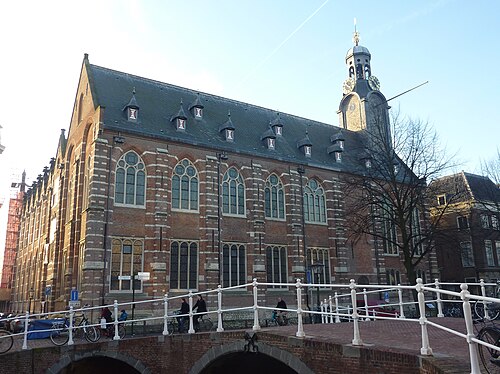
Image credit: By Rudolphous – Own work, CC BY 3.0, https://commons.wikimedia.org/wiki/Special:Redirect/page/9387291